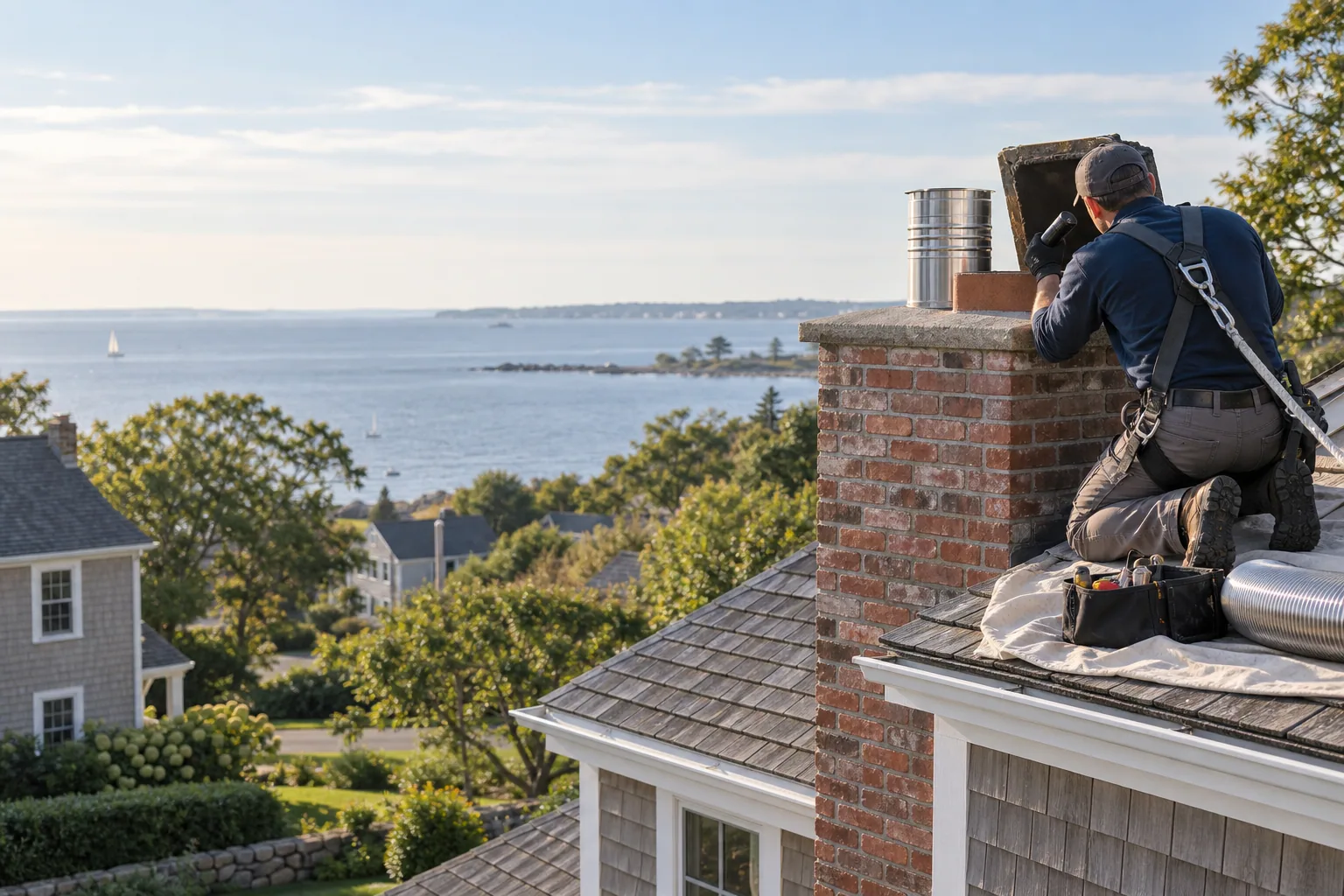
Fairfield Elite Chimney offers independent chimney planning information and quote routing for Redding, roughly 20 miles from Fairfield. In this wooded northern Fairfield County town between Ridgefield, Weston and Easton, a fireplace or wood stove may contribute to everyday heating rather than wait for a holiday gathering. Older colonial and farmhouse homes can have substantial masonry stacks whose outside appearance tells only part of the story. A local provider needs to examine the appliance, deposits, interior passage and exposed masonry before recommending cleaning, liner work or repairs.
Begin with how the Redding household uses wood heat
A stove used through long winter evenings places different demands on a venting system than a fireplace lit occasionally. Describe that pattern when requesting a visit: which appliance runs, how often it is used, what fuel goes into it and whether its behavior has changed. Note slow starts, smoke entering the room, an unfamiliar smell or debris appearing at an accessible opening. Those observations help establish the inspection scope without turning a homeowner’s description into a diagnosis.
For an older Redding colonial, identify whether the working fireplace belongs to the original central stack or a later addition. In a farmhouse with a stove fitted into an existing hearth, retain any installation documents showing the connector and liner arrangement. A broad brick chimney may contain separate passages with very different histories. The provider should trace the route serving the appliance you actually rely on, including connections that disappear above the fireplace opening.
Put sweeping and inspection in the same conversation
A request for a chimney sweep should describe the appliance and its use rather than simply ask for a brush through the stack. Cleaning addresses deposits and accessible debris; inspection documents the condition of the venting system and the limits of what could be seen. Ask how the provider will assess deposits, protect the work area, access cleanouts and record any findings that need further evaluation. A cleaning visit alone does not establish that every concealed joint is sound.
Use the chimney liner inspection guide to prepare questions about the internal passage. The Level 2 chimney inspection guide explains broader documentation when an appliance change, property transfer or reported event calls for it. If cleaning is needed to make the camera view useful, the proposal should explain that sequence. Ask for images tied to identifiable locations rather than an unexplained collection of closeups.
Heavy tree cover makes the termination worth a close look
Redding’s wooded setting gives the top of the chimney its own inspection questions. Leaves, twigs and evidence of animal entry belong in the visit notes, especially if a cap appears displaced or a screen looks damaged from the ground. Do not reach into an opening to investigate a suspected nest. Tell the provider what you noticed and when, allowing them to decide what access and any specialist involvement the situation requires.
The cap, crown and flue opening perform different jobs. A cap can help limit entry at the termination, while the crown sheds water from the top of the masonry. Neither repairs a damaged liner farther down the stack. Ask the inspection record to distinguish debris removal, cap condition, crown cracking and internal flue findings. Under a heavy canopy, a newly fitted cap still needs an appropriate inspection and maintenance plan; it is not a reason to forget the chimney until smoke or water appears indoors.
Match the liner to the stove or fireplace
An oversized masonry passage is not automatically a suitable route for a wood stove. The appliance requirements, actual flue dimensions, height, offsets and existing materials all matter. The wood stove chimney liner guide addresses that connection, while the fireplace liner guide covers an open hearth’s different venting context. A conversion from one use to another needs its own assessment even when the chimney exterior stays the same.
Once the measured route and condition are documented, review chimney liner installation. Compare stainless steel liners and cast-in-place liners against the findings and the proposed system’s suitability. Neither the farmhouse style nor the size of the stack selects the material. Ask how sizing, insulation, appliance connections and termination details will be established, and which defects require separate masonry work before a liner can be installed.
Give masonry and water entry their own scope
A tall masonry chimney on a wooded Redding lot may show worn mortar, cracked crown surfaces or staining around the roof intersection. Ground-level photographs can help describe these symptoms, but they cannot locate every source of water entry. Request an assessment that separates brick and mortar condition from flashing, crown and cap details. Repointing a joint and relining a flue solve different problems, even when both appear in the same proposal.
For internal damage, the chimney liner repair guide provides a starting point for discussing repair versus replacement. Ask what evidence supports a limited repair and what remains outside the camera’s view. Exterior masonry repairs should likewise identify the affected area, preparation and intended result. A large colonial stack should not receive a vague recommendation to repair “the chimney” when the observed defect concerns one passage or one exposed face.
Plan access from the driveway to the hearth
For a Redding house set back among trees, provide practical arrival notes about gates, driveway width, turns and available parking. Mention branches near the roofline and any slope beside the chimney. These details help the provider plan equipment and access; homeowners should take photographs only from ordinary safe standing locations. The person performing the work must determine how to reach the roof and inspect concealed portions.
Near the Georgetown village edge, give the full property address and confirm the municipality associated with the parcel. A village name is helpful orientation, but it does not settle the approval path for a particular property. Confirm any current permit or review requirements for the proposed appliance, liner or visible masonry work with the responsible local authority before work starts. Keep the confirmed requirements with the written scope so later changes can be checked against the same property record.
Compare a complete proposal and keep the result
A useful Redding proposal follows the inspection evidence through to a defined scope. It should identify the appliance and passage, explain cleaning or preparation, name the proposed liner or repair system and describe connections and access. Ask which cap, crown, flashing and masonry tasks are included. The liner cost planning guide helps organize those questions without treating a general description as a property-specific quote.
Keep the dated inspection report, labeled images, product information and any applicable permit or inspection records together. For a stove used as regular heat, retain the provider’s operating and maintenance instructions with the appliance documents so the next visit starts from a reliable record. If the work changes after an opening or cleaning reveals additional damage, save the revised scope and the supporting images as well.
Send the Redding appliance details, usage pattern and observed symptoms to begin a request. The site routes inquiries to a local provider and does not provide remote clearance to operate a chimney. Nearby guides for Ridgefield, Weston and Easton cover adjoining inland settings; keep each property’s findings and local review questions with its own address. The service area directory lists the wider coverage.
Technical references
For the code and consumer context behind a proposed scope, consult the Connecticut State Building Code resource and Connecticut home-improvement guidance. These reference links also appear in the neighboring town guides; confirm current requirements for the actual project.
Matching an appliance to the flue in Redding? Compare oil furnace chimney liners and chimney liner insulation as part of the selected system before approving a Redding scope.
Frequently asked
01What should I record if my Redding stove supplies heat most evenings?
Describe how often you burn, the fuel used, any change in startup or draft, and the last documented cleaning. Include the stove model and previous inspection report so the provider can plan around actual use.
02Can leaves below a chimney cap tell me the flue is blocked?
Leaves show that debris needs attention, but their location alone cannot establish whether the venting passage is open. Have the provider inspect the termination and flue before drawing a conclusion.
03Does a large farmhouse chimney need a liner sized to its outside dimensions?
No. Liner sizing depends on the connected appliance, fuel, venting requirements and measured internal route. The outside width of a masonry stack does not establish the correct liner size.
04Should a nest near a Redding chimney be removed during ordinary sweeping?
Report suspected nesting before the visit. The provider should assess the location and whether a wildlife specialist or other requirements apply before removal, then inspect the passage and entry protection.
05What location details help with a home near the Georgetown village edge?
Give the property's full address and confirmed municipality along with driveway and appliance details. A Georgetown location description helps orientation but should not replace the parcel information used to plan the work.