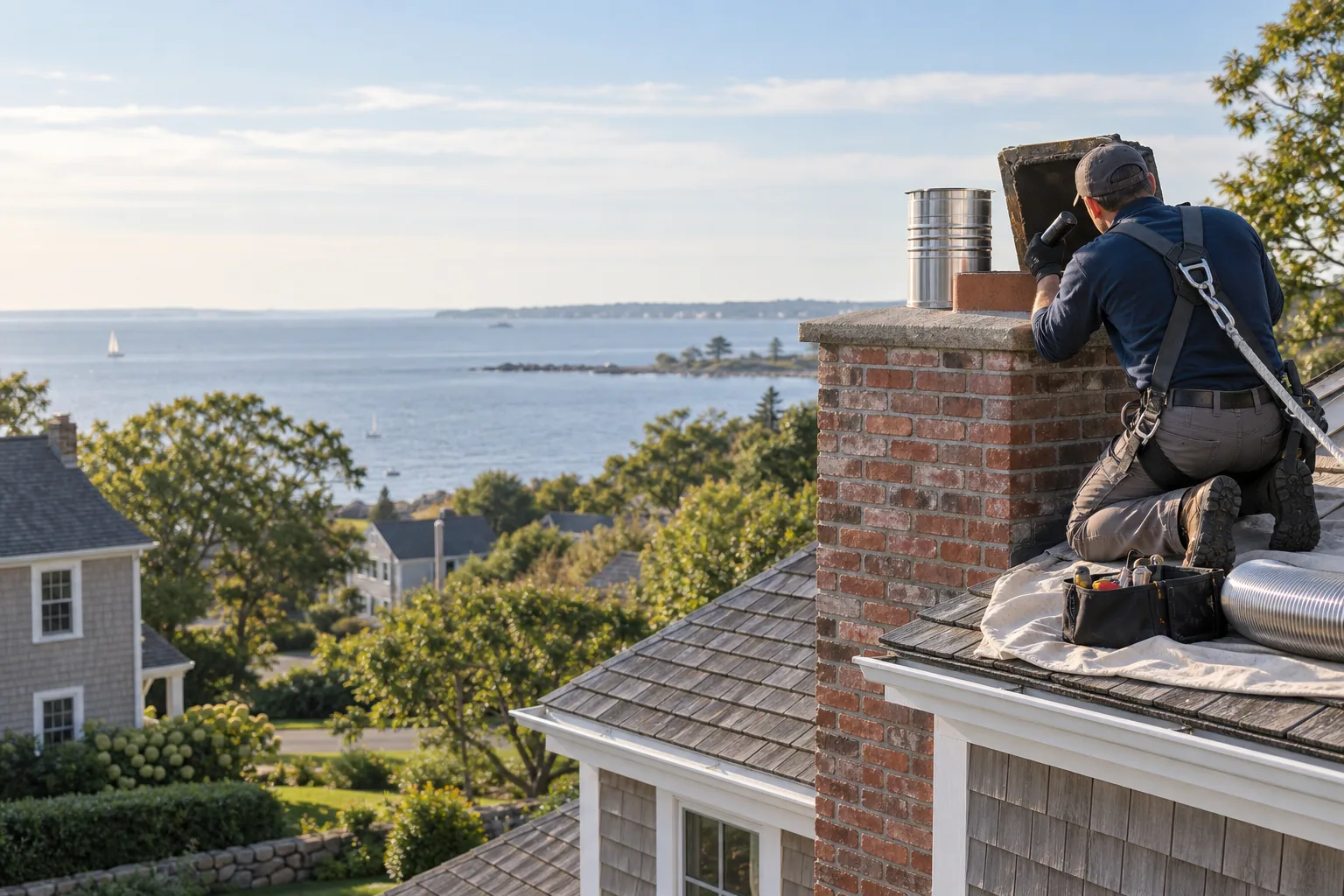
Fairfield Elite Chimney is an independent homeowner decision resource and quote-routing site for fireplace chimney liner in Fairfield County. This guide focuses on a fireplace venting route considered from opening and smoke chamber through the liner and termination. It cannot inspect a property remotely or approve a chimney for use.
Read the fireplace from opening to termination
Document opening dimensions, throat and damper, smoke chamber, flue area, height, offsets, tile condition, masonry, house-pressure observations and prior smoke behavior. A provider should explain which facts are observed, which are measured, and which remain assumptions to verify on site. That distinction keeps a recommendation tied to this chimney instead of a generic sales package.
Measure the smoke path before selecting a liner
The liner recommendation should explain how the passage connects to the fireplace system and which smoke-chamber or damper work is included. Ask the proposer to place the decisive evidence beside the recommendation. If an alternative is rejected, the reason should be understandable to the homeowner and useful to a future technician.
Define transitions and masonry preparation
Keep liner work separate from firebox repairs, smoke-chamber parging, crown, flashing and draft troubleshooting even when one contractor proposes several items. Use the chimney liner inspection guide as the shared starting record, then compare the selected method with the broader liner installation guide.
Compare proposals by complete fireplace bands
Use bands for inspection and measurements, the liner assembly, transitions or masonry preparation, and final testing. That exposes whether a quote is pricing the same fireplace path. The Fairfield liner cost guide organizes a comparison without claiming that one online range can price every property. Written local quotes determine the real amount.
Schedule for large passages and difficult access
Large passages, difficult smoke-chamber transitions, tile removal and roof access may extend the work. A draft concern may also require observation beyond the installation day. Ask who controls each dependency and what must remain visible for inspection. A realistic sequence is more useful than a promised completion date that ignores access or discovery.
Avoid a liner-only draft promise
A new liner alone cannot guarantee that every fireplace will draft correctly; proportions, height, air supply, pressure and operation remain relevant. The contract should identify related work as included, excluded or undecided. That prevents one symptom from being used to sell a correction that addresses a different part of the system.
Keep the finished route and observations together
Keep dimensions, inspection images, liner system, transition detail, closeout photos and operating observations. Connecticut publishes the current State Building Code and Chapter 18 chimney and vent provisions. Confirm the applicable edition, local authority, permit path and inspection points for the exact address and scope at action time.
Prepare for the fireplace chimney liners assessment
Before the appointment, gather the appliance label and manual when available, note the fuel and recent operating changes, and collect earlier chimney reports, permits, invoices and product paperwork. Photograph the appliance connection, cleanout and chimney exterior only from safe, ordinary standing locations. Describe smoke, odor, moisture, debris or shutdown concerns without trying to diagnose them. A date and operating condition make each observation more useful than a conclusion such as “the liner is bad.”
At the visit, ask the provider to trace one named route from the connected appliance to its termination. The inspection record should distinguish direct observations, measurements, homeowner history and inaccessible conditions. It should also say whether cleaning or additional access is needed before the passage can be evaluated. These details matter for a fireplace venting route considered from opening and smoke chamber through the liner and termination; they prevent a product choice from appearing more certain than the evidence permits.
Review the written recommendation in a fixed order
Read the report, proposal and product information together. First confirm that all three describe the same appliance and flue. Then check the condition being addressed, the selected method, component compatibility, dimensions, preparation, access, inspection steps and closeout records. The liner recommendation should explain how the passage connects to the fireplace system and which smoke-chamber or damper work is included. A substitution, newly discovered restriction or changed appliance should return the decision to that same sequence instead of becoming an unexplained verbal change.
Know when to pause the decision
Pause when the provider cannot identify the connected appliance, the camera did not reach the relevant section, two passages may be confused, the selected system is unnamed, or a proposal combines liner work with unrelated masonry and appliance work without boundaries. A new liner alone cannot guarantee that every fireplace will draft correctly; proportions, height, air supply, pressure and operation remain relevant. A short delay to resolve missing evidence is preferable to preserving uncertainty inside a permanent venting assembly.
For immediate fire, smoke, carbon-monoxide alarm or active combustion concerns, leave the area as appropriate and contact emergency services or the responsible utility or qualified service provider. This site is a planning and quote-routing resource; it does not provide emergency diagnosis.
For a property-specific review, send the appliance, fuel, town, symptoms and available records. You can also compare all liner services and the Fairfield County town guides.
Sources and planning references
- Connecticut State Building Code
- Connecticut Residential Code Chapter 18, Chimneys and Vents
- Connecticut home-improvement guidance
- CSIA relining training overview
- DuraVent DuraFlex stainless liner system
Frequently asked
01Can fireplace chimney liner be selected from a phone description?
No. A qualified provider needs the appliance, chimney, access and current condition before confirming a system or price.
02What should a written proposal identify?
It should identify the observed condition, selected method or product, preparation, components, access, exclusions, closeout and change conditions.
03Which local requirements apply?
Use the current Connecticut code source and confirm the exact Fairfield-area authority and project scope before work begins.