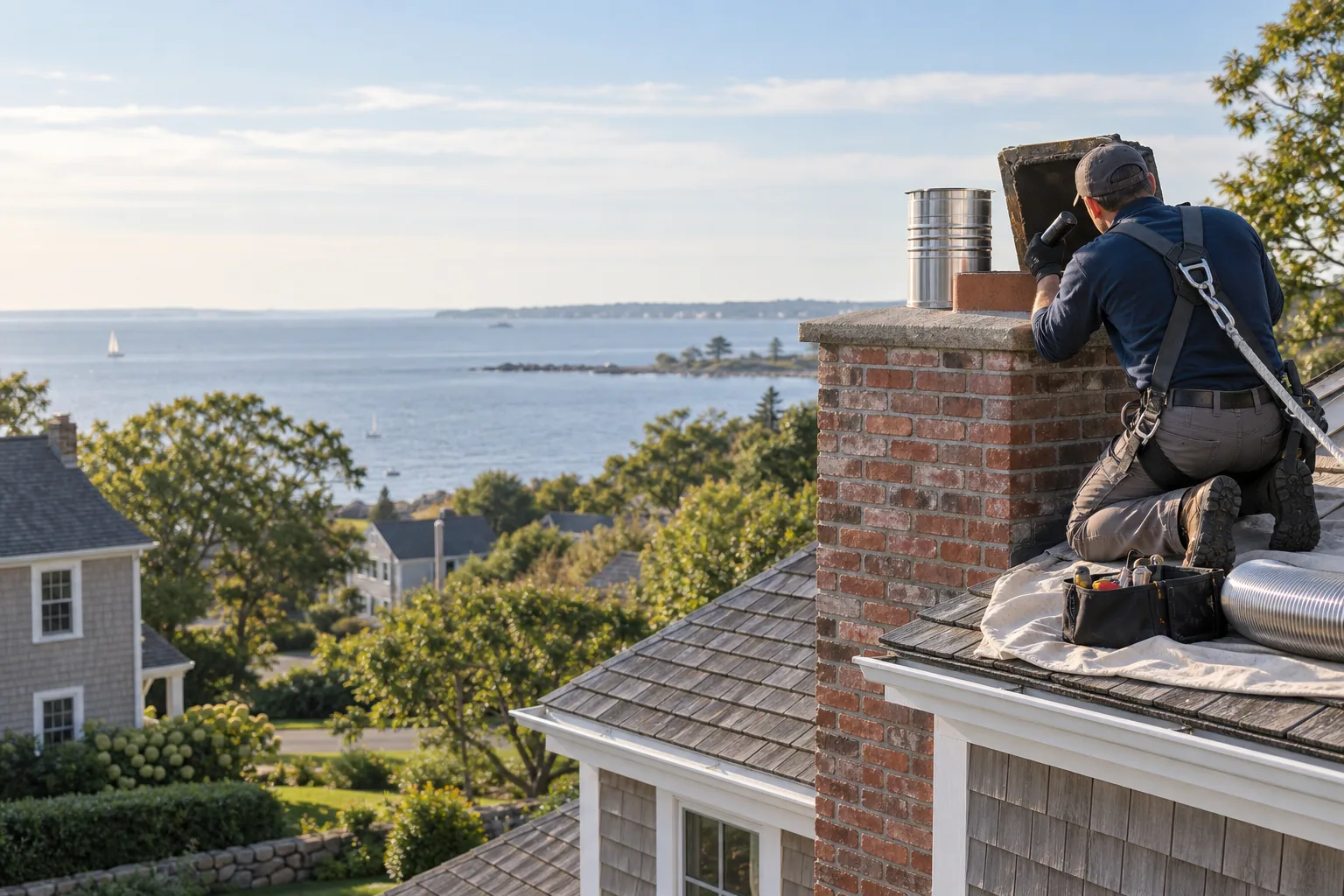
Fairfield Elite Chimney provides independent planning information and quote routing for Norwalk, roughly 10 miles from Fairfield. Norwalk includes historic cores, multifamily properties, coastal neighborhoods and houses with repeated renovation histories. A qualified local provider must inspect the real appliance, flue and work area before confirming a method, safety conclusion or price.
A Norwalk property record comes before a product choice
A permit-history search may help identify prior appliance or chimney work, but it cannot prove the present liner condition. Use records to frame the direct inspection, not replace it. Record fireplaces, stoves, furnaces, boilers, water heaters, connectors, thimbles, cleanouts and roof terminations that can be identified safely. Mark active, uncertain and apparently abandoned passages rather than guessing which chimney serves which appliance.
Norwalk field notes that should travel with the request
Norwalk Building and Code Enforcement handles both building and trade permits. The city also provides a formal way to research a property permit history. That archive can reveal documented equipment or chimney work without establishing how the system performs today. A South Norwalk row or multifamily property may require especially careful flue and unit labels. The final Norwalk record should connect the new permit and inspection to the exact appliance and passage rather than the address alone.
A Norwalk permit-history search can supply dates and descriptions, but each item should be marked as documentary history rather than present-condition evidence. Multifamily and mixed-use requests need the unit, appliance and accessible common areas stated before scheduling. Use separate identifiers for parallel flues that terminate near one another on a row or shared roof. If a prior trade permit names equipment, compare it with the label now visible instead of assuming it remains installed. The final Norwalk file should connect today’s building or trade approval to the exact liner and appliance inspected.
Export the relevant Norwalk permit-history entries with their dates so a later portal change does not erase the planning trail. Keep unsupported family recollections in a separate note.
Use local building form to plan access, not diagnose the liner
Send ground-level photographs and describe ordinary access constraints for the Norwalk property. Roof pitch, height, landscaping and neighboring structures can affect setup, but they do not reveal hidden joints, corrosion, deposits or clearances inside the chimney.
Inspect and label the complete Norwalk venting route
Ask the provider to identify the appliance, fuel, input, connector, current liner material, visible dimensions, height, offsets, cracks, gaps, deposits, corrosion, staining and viewing limits. A useful camera sequence names its direction and location. Start with the liner inspection guide and use the Level 2 guide when a transfer, system change or significant event calls for broader documentation.
Keep liner, masonry and water-entry scopes separate in Norwalk
A liner is the internal venting passage. Crown, cap, flashing, brick, mortar, smoke chamber, firebox, connector and appliance are related but distinct components. Ask each Norwalk proposal to say what is included, excluded and still undecided.
Confirm the current Norwalk municipal path
Norwalk Building and Code Enforcement issues building and trade permits, performs inspections and provides a formal route to research property permit history. Confirm the records and approvals tied to the exact address. Requirements can change and can differ for internal relining, visible exterior work and appliance replacement. Do not copy an approval path from Fairfield or another nearby town.
Compare Norwalk proposals in homeowner decision bands
Place the same inspection record beside every proposal. Compare inspection and preparation, liner system and components, access and connections, then permits and closeout. The cost guide shows those bands without pretending an online range is a property-specific quote.
Keep the finished Norwalk record with the home
Retain the appliance data, before-and-after images, product identity, sizing basis, insulation, connections, permit and inspection record, operating checks, invoice and warranty. A future owner or technician should be able to see what changed and why.
Build a useful Norwalk intake packet
Start with the full Norwalk address and identify whether the property is a single residence, multifamily building or another occupancy. List each fireplace, stove, furnace, boiler and water heater that may connect to masonry. For every active appliance, record the fuel, model information that can be read safely, visible connector route and any recent replacement or conversion. Attach earlier camera reports, permits, invoices and product documents instead of summarizing them from memory.
Photograph the chimney exterior, appliance connection and cleanout only from safe standing locations. Note ordinary access facts such as gates, narrow side yards, shared drives, protected landscaping and known parking limits. The provider, not the homeowner, should decide how to access a roof or concealed area safely. These notes help plan a Norwalk visit; they do not establish liner condition.
Keep symptoms factual until the route is inspected
Dates and operating conditions make observations more useful. Write “odor noticed after the furnace started,” “debris found near the cleanout,” or “staining appeared after rain” rather than choosing a cause. Similar symptoms can come from different parts of the chimney, appliance, connector or exterior envelope. The inspection and proposal should show which evidence supports the recommended Norwalk scope and which questions remain open.
Review the Norwalk closeout before the provider leaves
Match the completed work to the original flue label, appliance and written scope. Collect product identity, installation images, connection details, inspection outcome, permit record when applicable, operating checks, invoice, warranty and any monitoring instructions. If work changed after discovery, retain the written reason and revised scope. That file should allow another qualified person to understand what was inspected, what was installed or repaired, and what was deliberately left outside the project.
For follow-up, share the Norwalk address, appliance, symptoms and existing records. The site routes the request to a local provider; it does not offer emergency dispatch or remote clearance.
Official and technical sources
- City of Norwalk Building and Code Enforcement
- Connecticut State Building Code
- Connecticut Residential Code Chapter 18, Chimneys and Vents
- Connecticut home-improvement guidance
- CSIA relining training overview
Frequently asked
01Does a Norwalk mailing address prove which office handles the work?
No. Confirm the parcel, municipality, appliance and complete work description with the current local authority.
02Can an exterior photo diagnose a Norwalk chimney liner?
No. Exterior images help plan access, while the appliance and internal passage require direct inspection.
03What should be included with an assessment request?
Share the address, appliance and fuel, symptoms, prior reports, known liner history and ordinary access notes.