Fairfield Elite Chimney prepared this guide to help Fairfield County homeowners understand when chimney liner replacement belongs in a written proposal. Cracked clay tiles, missing joints, corrosion and appliance changes can all prompt further investigation. None gives an online reader enough information to select a liner. Start with a labeled appliance and flue, then ask a qualified provider to show which findings support repair, replacement or a different venting approach.
Replace based on documented condition and appliance fit
A liner must suit both the connected appliance and the chimney route. A passage can look relatively clean and still be unsuitable for a replacement heating appliance. Conversely, the age of a masonry chimney alone does not establish that its liner has failed. Separate the condition question from the compatibility question so neither disappears inside a general recommendation to reline.
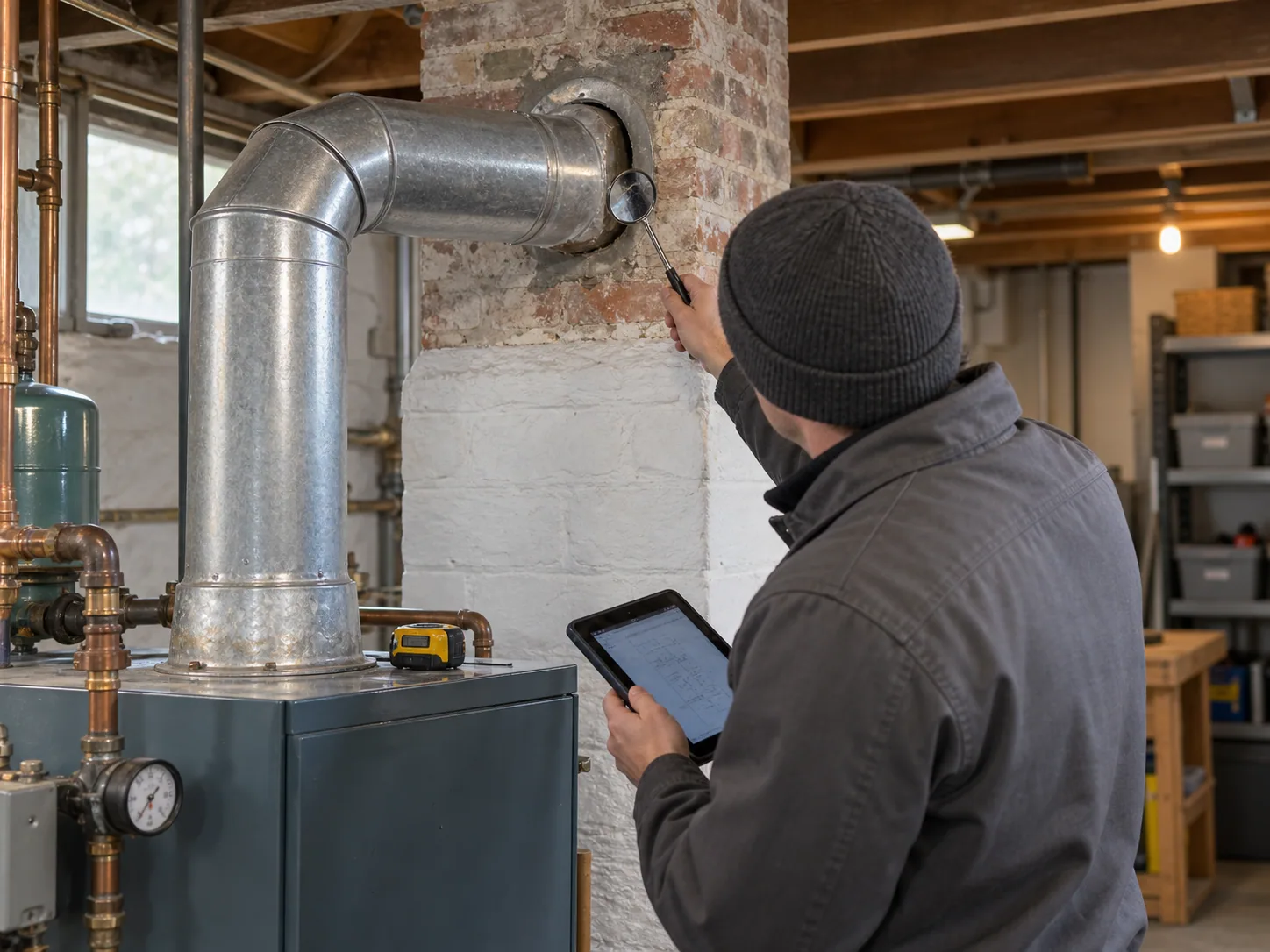
For a property in Fairfield, identify every fireplace, stove, boiler, furnace and water heater connected to masonry. Include the fuel and any available model information. A stack with several flues needs a clear label for each passage. The report should specify which passage was inspected and which appliance the recommendation covers. Keep an abandoned connection listed as uncertain until its status is confirmed.
What cracked clay tiles should tell the inspector
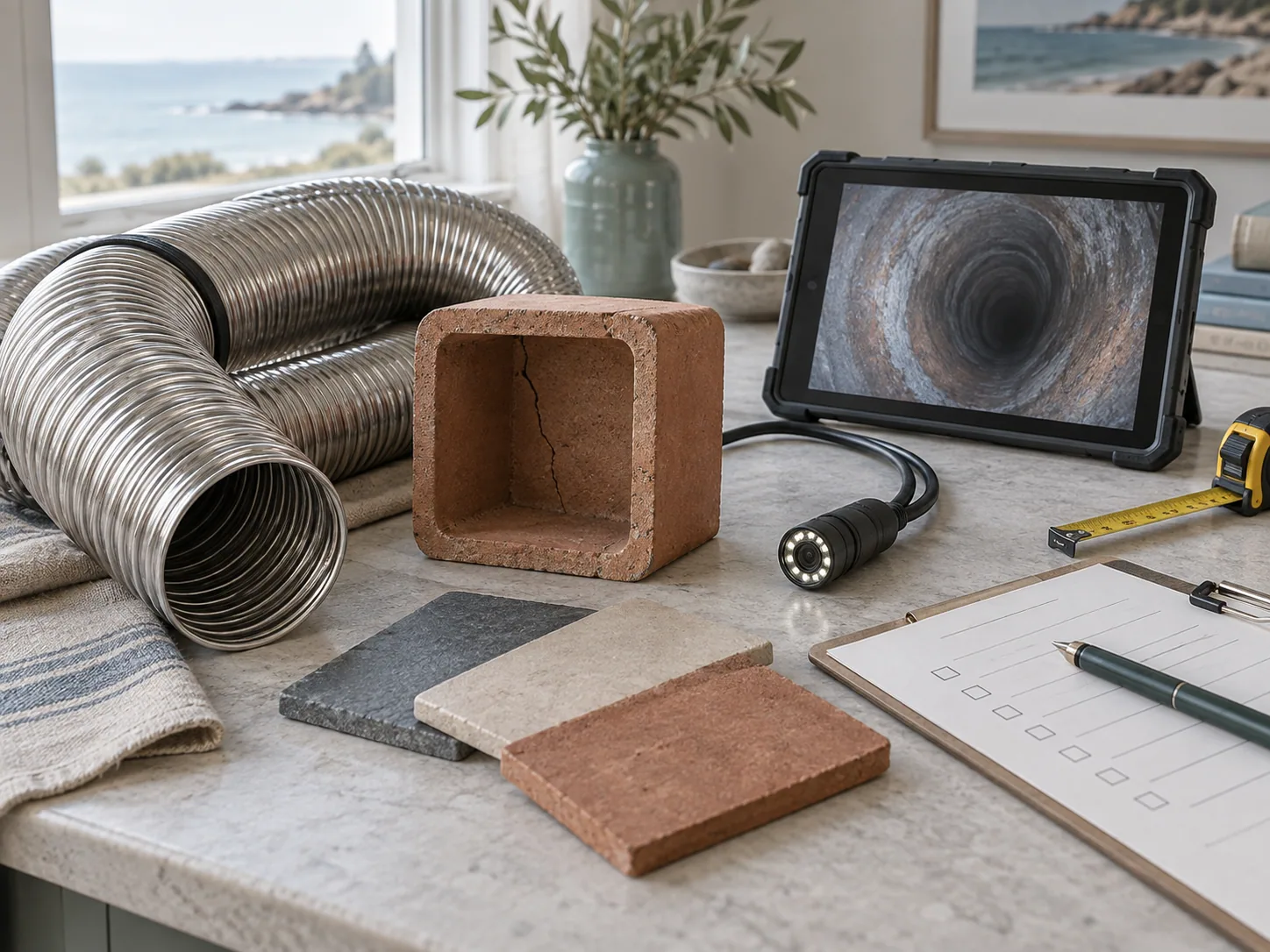
Cracks, displaced sections and open mortar joints deserve location-specific documentation. Ask for images that identify the section, orientation and extent of each visible defect. A close-up without a location can make it difficult to compare findings between visits. The provider should also record deposits, obstructions, moisture evidence and any areas that could not be viewed.
Replacement becomes a stronger consideration when the documented defects cannot be addressed by a suitable repair or when the existing passage cannot support the intended appliance. That decision depends on more than the number of cracks. Access, surrounding masonry, dimensions, offsets and the proposed repair method all affect feasibility. Review the clay flue liner repair guide to prepare questions about a limited repair before accepting a full replacement scope.
Do not treat a patch at an accessible opening as proof that the entire flue is restored. Ask how the provider will evaluate the remaining passage and verify completed work. If tile removal is proposed, the written scope should explain the reason, preparation and discovery conditions rather than assuming every chimney needs the same demolition.
What a Level 2 inspection should document first
A Level 2 chimney inspection provides a framework for documenting the system when a change, event or other applicable circumstance calls for that level of review. Ask the provider to identify the inspection scope and the reason for it. Video scanning supports the internal assessment, while accessible construction and connected equipment need their own record. Concealed conditions may remain unresolved.
The report should name the appliance and fuel, show the connector route, identify the present liner material and describe visible defects. It should record measured dimensions, chimney height, offsets, available access and the limits of the inspection. Ask whether cleaning is required before an obscured surface can be assessed. The inspection record should distinguish a measured fact from a homeowner recollection or an assumption.
Each recommendation should connect a finding to a proposed correction. If the report recommends replacement, ask which condition rules out repair and which product or appliance requirement controls the new system. If further access is needed, ask what question it will resolve. A report that clearly states uncertainty is more useful than a confident conclusion that lacks supporting images or measurements.
Oil-to-gas conversion changes the venting question
A fuel conversion is a reason to reassess venting before the replacement appliance operates. The new equipment may need a different liner size or a venting route specified by its manufacturer. Some appliances use venting systems outside the masonry chimney. A stainless sleeve is therefore a possible outcome of the review, not an automatic requirement for every conversion.
Ask the heating contractor and chimney provider to coordinate appliance input, vent category, connector arrangement and the complete route. An oversized old flue can present different draft and condensation concerns with new equipment. The selected solution must follow the appliance instructions and applicable requirements rather than copying the diameter of the former oil connector.
Check for a water heater or other appliance left on a shared passage after the heating equipment moves to a separate vent. Its remaining route needs evaluation on its own. Record which connections stay active, which are removed and how unused openings will be addressed. Keep both contractors’ scopes together so each party knows who handles connections, operating checks and final documentation.
Compare stainless steel with cast-in-place after inspection
A stainless steel chimney liner should be proposed as a compatible system with a stated application, diameter, insulation approach, fittings, supports and termination. Ask for the manufacturer and product identity. Material alone does not establish suitability, and individual parts should not be combined without the system’s required compatibility.
A cast-in-place chimney liner may be considered where the inspected passage and intended use suit that approach. Ask how the installer will prepare the route, establish dimensions, manage curing and verify the finished passage. If structural benefit is claimed, request the basis for that claim and the limits of the proposed work. Neither liner method automatically resolves unrelated masonry defects.
Use the same inspection record to compare both proposals. Include preparation, tile removal when needed, roof access, appliance connections, insulation, permits and closeout. A shorter proposal can omit essential work even when its named liner material matches another offer. The installation guide explains how those parts fit into a complete project.
Keep exterior repairs and liner replacement distinct
A leaking crown, failed flashing or damaged cap can contribute to moisture observations without proving the internal liner needs replacement. Likewise, installing a new liner does not by itself repair the exterior water-entry route. Ask the provider to separate the evidence and proposed correction for each component, even when the work is scheduled together.
For an inland property, the Wilton guide and New Canaan guide help organize address and access details. Wooded access, roof height and driveway layout can affect preparation. Those facts should help plan the visit without substituting for internal inspection. Confirm permit and review questions with the authority for the actual parcel and scope.
Close the replacement decision with a usable property file
Before approving work, collect the inspection report, labeled images, appliance information, sizing basis, named liner system and written exclusions. Ask what happens if preparation reveals a restriction or damage that changes the method. A written change process should identify the new evidence and revised work before the original recommendation is treated as settled.
At completion, retain product records, installation photographs, connection details, applicable permit and inspection records, operating checks and warranty information. Match everything to the original flue label. For immediate smoke, fire or a carbon-monoxide alarm, leave the affected area as appropriate and contact emergency services. This planning site does not provide emergency dispatch or remote clearance. For a planned assessment, send the address, appliance, symptoms and existing reports.
Sources and planning references
- Connecticut State Building Code
- Connecticut Residential Code Chapter 18, Chimneys and Vents
- CSIA relining training overview
Common Questions
Does an older chimney automatically need a replacement liner?
No. Age provides context, but observed condition, appliance compatibility and a documented inspection determine the recommendation.
Do cracked clay tiles always call for the same repair?
No. The location, extent, access and condition of the surrounding passage must be documented before comparing repair with relining.
Does an oil-to-gas conversion require a liner review?
Yes. The new appliance instructions, venting route, sizing and any remaining shared appliances need review before selecting the venting system.
Can photographs clear a chimney for continued use?
No. Photographs support a report, but a qualified provider must assess the connected system and explain inspection limits.