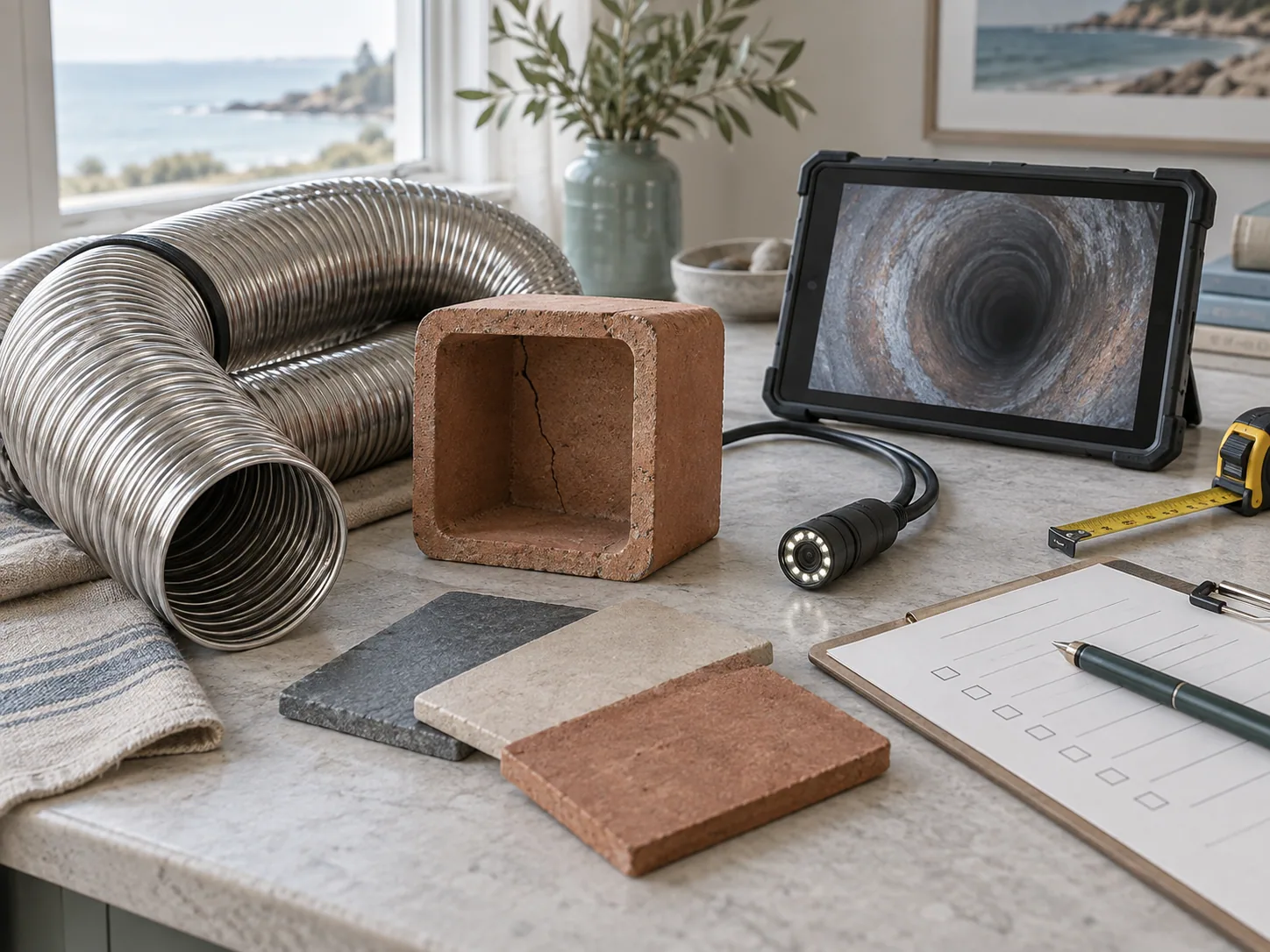
Fairfield Elite Chimney prepared this independent homeowner guide for Fairfield County. Coordinate appliance category, venting route, sizing, condensation, shared connections and records when an older chimney sees a fuel or equipment change. It is a planning resource, not an inspection report, legal opinion or promise that one method fits every home.
Inventory everything connected before conversion
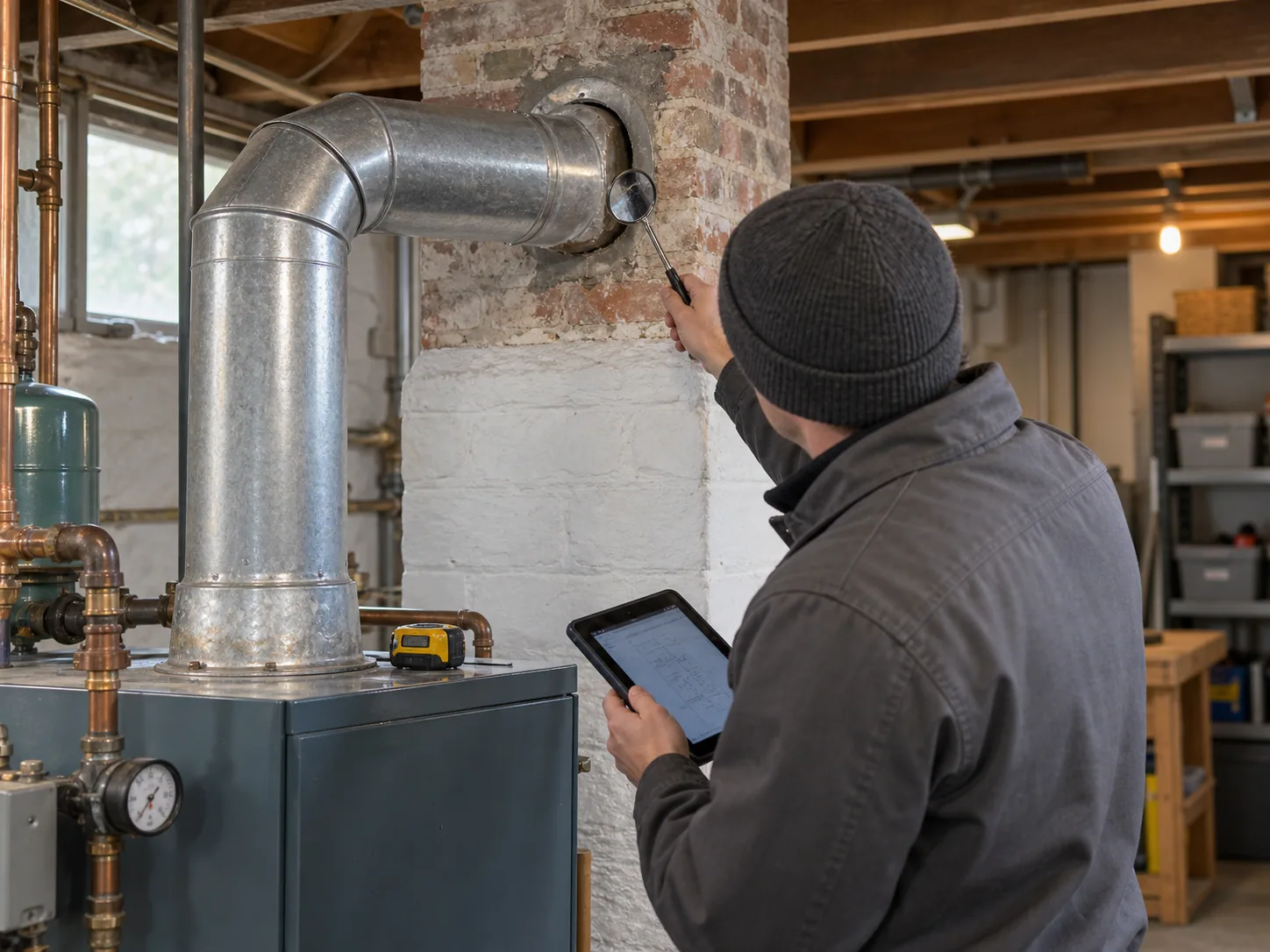
Record the oil appliance, proposed gas equipment, water heater or other common-vented appliance, connector layout, chimney height and existing liner. A removed appliance can change the remaining venting system.
Label the supporting photograph, measurement or document and keep it beside the relevant finding. If evidence is missing, write down who will obtain it and whether the proposal depends on the answer. This prevents a preliminary assumption from quietly turning into a permanent project fact.
Put that step into the inspection record
Ask for the property-specific facts behind the recommendation, the source or instructions that control it, and any section that remains inaccessible or undecided. Record dimensions, product names, access, exclusions and written change conditions so the decision can be reviewed later.
Use plain labels that another homeowner, inspector or technician can follow without having attended the original conversation. Keep options that were rejected and the reason they were rejected when that decision affects sizing, compatibility, access or future maintenance.
Investigate moisture without assuming one cause
Cooler exhaust, large masonry passages, rain entry and existing deterioration can all leave moisture clues. Ask which observed mechanism the proposed liner or exterior repair addresses.
Compare written documents in the same order: observed condition, governing appliance information, selected system, preparation, access, components, inspection and closeout. A proposal that changes one of those inputs should explain what else changes with it.
Put that step into the written proposal
Ask for the property-specific facts behind the recommendation, the source or instructions that control it, and any section that remains inaccessible or undecided. Record dimensions, product names, access, exclusions and written change conditions so the decision can be reviewed later.
Use plain labels that another homeowner, inspector or technician can follow without having attended the original conversation. Keep options that were rejected and the reason they were rejected when that decision affects sizing, compatibility, access or future maintenance.
Coordinate the chimney and heating trades
Name who disconnects and reconnects equipment, who selects the liner, who performs any required operating or combustion checks and who schedules permit inspection.
Ask what can be verified before work and what will only become visible after cleaning, access or removal. The contract should define written change conditions for those discoveries instead of using a broad verbal allowance.
Put that step into the inspection record
Ask for the property-specific facts behind the recommendation, the source or instructions that control it, and any section that remains inaccessible or undecided. Record dimensions, product names, access, exclusions and written change conditions so the decision can be reviewed later.
Use plain labels that another homeowner, inspector or technician can follow without having attended the original conversation. Keep options that were rejected and the reason they were rejected when that decision affects sizing, compatibility, access or future maintenance.
Build one closeout file for the converted system
Keep removed-equipment notes, new appliance data, sizing basis, connector and liner photographs, permits, commissioning, warranties and future service history together.
Assign responsibility for product selection, permits, inspections, trade coordination and final operating checks. A homeowner should know which professional answers each question and which record proves that the step closed.
Put that step into the written proposal
Ask for the property-specific facts behind the recommendation, the source or instructions that control it, and any section that remains inaccessible or undecided. Record dimensions, product names, access, exclusions and written change conditions so the decision can be reviewed later.
Use plain labels that another homeowner, inspector or technician can follow without having attended the original conversation. Keep options that were rejected and the reason they were rejected when that decision affects sizing, compatibility, access or future maintenance.
Questions that should stay unanswered until inspection
An online article cannot confirm the liner material, hidden clearances, appliance category, active venting route, required diameter, feasibility of a repair, safe operating condition or final price for a Fairfield County property. Treat those as field questions. A useful provider response shows the observation or measurement, names the controlling product or appliance information, and records any limitation.
Pause if two flues may have been confused, the camera did not reach the relevant section, the appliance label is unavailable, the proposed system is unnamed or related masonry and appliance work is folded into one unclear promise. For a fire, smoke, carbon-monoxide alarm or active combustion concern, contact emergency services or the responsible utility or qualified service provider rather than relying on this website.
Fairfield County next steps
Review all chimney liner services, open the inspection guide, compare cost bands, or use a town guide to locate current municipal context. When a scope is ready, confirm requirements for the exact parcel with the applicable official and product documentation.
For a property-specific follow-up, send the town, appliance, fuel, symptoms and available records.
Sources
- Connecticut State Building Code
- Connecticut Residential Code Chapter 18, Chimneys and Vents
- Connecticut home-improvement guidance
- CSIA relining training overview
- DuraVent DuraFlex stainless liner system
Common Questions
Can this guide determine the correct liner?
No. It organizes questions; a qualified provider must inspect and apply the current product, appliance and code requirements.
What belongs in the permanent property file?
Keep inspection evidence, appliance data, sizing, product records, permits, installation photos, closeout checks and warranty information.
Can an online guide confirm whether a chimney is safe to use?
No. A qualified provider must inspect the connected appliance, passage, accessible construction and current conditions.
When should a homeowner pause the project decision?
Pause when the appliance or flue is not clearly identified, important areas remain unseen, the proposed system is unnamed or the written scope does not match the evidence.